Homeopathy is suitable for treating a variety of health conditions and these often go further than what we usually look forward to from any medicine. Since homeopathy considers an individual to be a combined whole, it acts on several levels, both physically as well as psychologically.
Stop losing your hair with this outstanding, 100% natural formula.
FOR MEN AND WOMEN.

Severe conditions are generally limited by their own nature, occur for a brief period of time and are comparatively superficial. However, some conditions may really be critical. Provided such conditions continue in excess of just a few days or for over a week, according to definition, they are called chronic or sub-acute conditions.
It may be noted that homeopathic remedies are very effectual for acute health conditions, especially colds, fevers, wounds, inflammations, hemorrhages and others. In addition to simply lessening the symptoms, homeopathic remedies encourage repair of tissues and also help in putting off enduring effects.
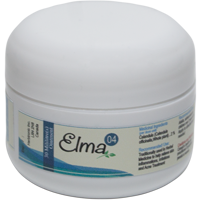
Acne keeping you down? Try this 100% natural ointment and change your life forever.
When we talk about chronic conditions, we actually mean enduring or persistent health conditions that cannot be cured by any specific means. On the contrary, such conditions are generally inclined to deteriorate progressively. Chronic conditions may occur due to any untreated acute ailment, but more frequently, they occur subtly over several months or even years.
From the homeopathic viewpoint, chronic also denotes that a particular condition occurs due to a deep-rooted basic pattern of vulnerability. Such chronic failings - irrespective of whether they are genetic or acquired - are believed to be the basis for an individual having a propensity to specific ailments, in particular tissues or organs.
Homeopathic remedies possess the aptitude to inhibit the advancement of probably the most critical chronic ailment and in the instance of less advanced diseases, it is able to permanently stop the progress of the ailment. Subject to the individual as well as the ailment, homeopathy not only cures both, but it is a very common aspect of homeopathy.
Nevertheless, extensive time as well as significant expertise is required to achieve this. In the instance of ailments that are in very advanced stage and cannot be cured, using homeopathic remedies may help in easing the symptoms and also provide physical as well as mental relief to the patient. In addition, homeopathy plays a vital role in helping the dying, aiding them to find the way for their spiritual changeover with enhanced simplicity, power and calmness.
All the strength of pharmaceutical fungicides - but without the harsh chemicals.

While various available forms of medicine are useful for treating severe as well as chronic ailments, homeopathy offers a different and distinctive methodology, which is not possible by any other remedial method.
This unique approach is known as constitutional approach, which cures an individual considering him/ her as a whole and where the physical and mental symptoms are considered to be a unified whole. In homeopathy, the endeavour is to select the remedy that will correspond with all the characteristics of the patient - their psychological and metabolic composition, disease history, body type, genetic inclination as well as the present pattern of the symptoms.
When a remedy of such likeness is administered, it will not only do well to the individual's core, but also all other parts of their body, brining in a comprehensive transformation in the organism.
Very similar to a stone hurled into a pond's center, undulations of the transformation will slowly move outward to the peripheries, leaving no tissue or molecule of the individual's body untouched. In the event of a constitutional prescribing, it is not necessary for the individual to be actually suffering from an ailment, as this treatment may work in the form of an eventual preventive medication, getting rid of all vulnerability patterns even before they are able to manifest them in the form of specific ailments.
However, irrespective of employing severe, chronic or even constitutional treatment, homeopathy is a genuine medication for the entire body, mind as well as the soul.
Homeopathic remedies work to strongly encourage the body to regain its normal functioning and, hence, it may prove to be immensely helpful in nearly all physical symptoms or health conditions. While homeopathic remedies act in a restrained manner, eventually they have an effect on the organism's cellular, chemical as well as the structural health. Homeopathy is effective for treating allergies, infections, back aches and chronic health conditions like arteriosclerosis, psoriasis and arthritis.
In homeopathy, an individual's internal emotional life is deemed to be most important. Even while a homeopath is treating an ailment that is merely physical, he/ she will take into consideration the psychological symptoms, as they are vital to analyze the symptoms of the condition.
In addition, any progress in the mental wellbeing of the patient is actually a benchmark as well as a scrutiny of the usefulness of the remedy that has been prescribed for the condition. As far as psychological treatment is concerned, homeopathy is an excellent means to treat conditions like depression, intense grief, or anger.
Homeopathy also effectively deals with enduring patterns of emotional disorders, for instance issues relating to self-abuse or self-esteem. In effect, turning to homeopathy to treat conditions like anxiety, depression and hyperactivity will prove to be extremely beneficial, especially when psychotherapy is also included in the treatment program.
Homeopathy is an outstanding means for individual development as well as transformation, aiding and speeding up the extensive work that is needed for self-development. The basic nature of homeopathic treatment is to liberate an individual - both the body and the mind - from the set means of life forms.
This comprises restricting perception and functioning patterns, in addition to the fundamental belief systems that influence our understanding. Several people have actually experienced that homeopathic remedies have the ability to expose as well as release our parts that have remained hidden for long.
In addition, during the course of treatment of one's constitution it is very common that previous emotional memories as well as issues become known and are resolved, associated with vital changes in one direction of life, relationships and career. This is evidently the dominion of professional homeopathy, owing to the requisite expertise as well as the unfeasibility of prescribing remedies accurately for oneself on this plane.
When a specific quantity of any potentized remedy (rendering a latent power to the medicine) is prepared, it will remain viable for a long period provided the medicine is kept in suitable conditions, without exposing it to direct heat and sunlight; potent odours or any kind of pollutant.
Moreover, the remedy will last for a very long time, because only a tiny amount of it is used every time. In homeopathy, one dose comprises a single drop of tincture, which is placed beneath your tongue or added to some water and ingested slowly. Alternatively, the tincture may also be put on a tablet prepared from milk sugar, which when placed on the tongue dissolves quickly.
A pharmacist may prepare the homeopathic remedies by blending the tincture with milk sugar, which is subsequently placed in casts that are similar to minuscule patty pans to solidify and dry. Preparing homeopathic remedies employing this method makes the tablets soft and they dissolve easily in the mouth.
A section of homeopaths has a preference to prescribe tinctures instead of tablets with a view to be sure that an exact amount of the medication has been administered to the patient for absorption by means of the mucous surface inside the mouth.
Alternately, homeopathic remedies may also be administered by means of olfaction - a method wherein the medicines are taken in by inhaling them from a bottle containing the tincture. In this case, the remedy is absorbed by the mucous surface inside the nostrils. In addition, if you want to administer a homeopathic remedy to an unconscious patient, you may very well place it below his/ her tongue or simply inside the patient's lower lip.
Majority of the traditional homeopaths make use of a centesimal scale of potencies, while some others employ the millesimal scale. A number of Indian homeopaths also have plenty of experience regarding the use of such LM potencies (also referred to as 'Q').
Dosages relating to low decimal potencies as well as the LM potencies are meant to be administered more frequently compared to the potencies measured in the centesimal scale. However, a number of homeopathic practitioners also repeat remedies having elevated centesimal potencies in the same manner. Perhaps, these homeopaths have got a wrong idea about what Samuel Hahnemann had written regarding the use of LM potency remedies.