The homeopathic remedy Cina is prepared from an herb called wormseed. As the rumor has it, this herb derived its name from Artemisia, a 4th century BCE Persian queen who is famous for her skills in botany. Several medicinal traditions, including the ancient Roman and the Chinese, have highly valued the family of plants to which wormseed belongs.
100% natural oil to treat effectively skin conditions such as acne, psoriasis, and rosacea.
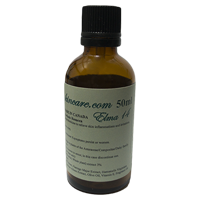
In effect, the ancient Greeks were the first to recognize Artemisia cina in the form of a medicine for treating intestinal worms. This herb's ingredient - santonin - still continues to be used in medications for treating worms to this day. Way back in 1829, Samuel Hahnemann proved the efficacy of Cina and believed that the helpful remedial attributes of the herb went further than its conventional performance in herbal medicine.
Characteristically, Cina is considered to be a medication for health problems related to children and is administered to eliminate intestinal worms as well as to heal shuddering of muscles, which usually occur when the children are very much irritated when they feel uneasy or are scolded.
Children who experience such muscle twitches are not able to tolerate touch or even being observed and habitually think of themselves to be ugly. Children requiring Cina may have a number of common symptoms, including restiveness, picking the nose, a hysterical mental state and grinding of teeth. Such people have fitful sleep and are troubled by terrors during nighttime. All these symptoms are likely to deteriorate during the night.
People who respond best to Cina are those who usually suffer from a feeling described as 'anxiety of conscience' - a baseless sentiment of some wrong doing that is evident in the form of stubbornness and irritability. It is likely that such people may have experienced abuse during their childhood.
An advanced, 100% natural revitalizer that will keep your skin glowing and looking young.

Besides being primarily employed for eliminating worms, the homeopathic remedy Cina is also used to treat spasm as well as fits in children. Even in the contemporary times, Cina is used as a remedy for worms and also for curing fitful coughing, shuddering of the muscles, fits of temper and also sleep disorders in children.
The homeopathic remedy Cina is prepared from an herb known as wormseed. As a single remedy, Cina is most well known for its ability to provide relief from irritation in the intestines frequently associated with invasion by common parasites like pin worms in the case of humans as well as animals. It is also effective in treating diarrhea.
This remedy has one more attribute that is somewhat exceptional and that is its aptitude to put off grinding of teeth, particularly during the night. In addition, Cina is also given to people who suffer from bed-wetting, fevers not accompanied by thirst, irritation of the nose, cold symptoms accompanied with violent coughing, hypersensitivity as well as loathing to be touched.
The homeopathic remedy Cina is most effective for people who have a propensity to undergo immense petulance. Generally, this medicine is given to children since Cina is most beneficial for the young and the problems faced by them. People who benefit most from Cina are those who are likely to feel very restive and habitually hysterical.
100% natural formula for all your skin problems. Excellent for diabetics.

In addition such people usually also find it extremely hard to be at rest for a long time and also have sleeping problems. Incidentally, all the physical as well as mental symptoms of such people occur at the same time.
Cina is generally a medication for children and people requiring this homeopathic medicine usually suffer from a low self-respect and have been found to be irritated insightful and obstinate. In effect, such people are generally repulsive to touch or even anyone observing them. Adults who require Cina are also stubborn and always suffer from a guilty feeling, which is over and over again baseless.
Their symptoms deteriorate when they are suffering from any ailment. In such situations they become more restive and are unable to endure interference from anyone. In case they are picked up or looked at, small children will generally start screaming and kicking.
Patients who require Cina most are restive and fidgety and are fidgety with their face and nose all the time. Their eyes look pale and are sunken giving the appearance of a child who is tormented by worms. Such patients are always angry, irritable and their face has a pale look having dark circles around their eyes.
These people also grind their teeth during the night and have a propensity to seizure. It has been observed that such patients have the hunger of a canine, or sometimes an erratic desire for food. Children who suffer from this condition have a tendency to pick their nose and scream in their sleep. They also experience tweaking of the hands as well as the feet and their urine is milky. Another conspicuous symptom endured by such people is that they often have a bluish hue in the region of their mouth.
Dried, unopened flower heads, leaves.
Talking from the medical perspective, Cina is not a new remedy, but people have been familiar with it since the earliest times. In fact, this herb was employed to prepare an assortment of medications for treating numerous health conditions. Since hundreds of years ago, people relied on Cina for its therapeutic properties that helped in treating intestinal worms. Even today, a number of parts of this herb are used in the preparation of specific medications to treat worms.
The homeopathic remedy Cina is made with the yet-to-open flowering buds of the herb that are collected during the fall. These flowering buds are dried and pulverized roughly to prepare a powder. Subsequently, the powder is marinated in alcohol.
At last, the solution is watered down and succussed (shaken vigorously every time it is diluted) and the resultant solution is the homeopathic remedy Cina, which does not possess even the slightest attribute of the actual herb - wormseed. This homeopathic remedy is especially useful in treating the conditions discussed below.
When an individual is suffering from intestinal worms, his/ her stool will have a whitish color, which is an evidence of the presence of the worms. They will also experience a wounding and nipping pain in the abdominal region, occasionally accompanied by bloating.
The person is also likely to have a compulsion for grinding his/ her teeth during night-time and also a propensity to fidget with their nose as well as scratch their rectum - both of which become tickly. Such patients may lose their appetite, have a great craving for food or their hunger may even be erratic accompanied by possible desire for sugary foods. Habitually, they will experience severe tetchiness as well as an intense restiveness.
This homeopathic remedy is also useful for curing whooping cough or acute, gagging cough accompanied by convulsion of the limbs prior to a bout of coughing. Patients who require this medication experience constriction in the chest, which makes it difficult to breathe.
In effect, even talking or abrupt movements may result in severe coughing. When children suffer from this condition, their body has a propensity to become stiff prior to a coughing bout. Often fierce coughing may result in raising the blood pressure in the head, while the patient may also alternately endure a blocked and runny nose.
Such patients may generally have a compulsion to fidget with their nose and occasionally experience nosebleeds. In many cases, the patients become extremely touchy and tetchy.
Cina is helpful in treating intense tetchiness in children, particularly those who are obese and have a very erratic desire for food. Such children may have fits of temper when anyone scolds them or owing to worms. It is worth mentioning here that children who show petulance are also inclined to have temper tantrums or fits of temper. This may occur just after they are refused something or purely as an element of their unpredictable as well as demanding actions.
People who find it difficult sleeping or sleep soundly may find Cina beneficial. This homeopathic remedy is also effective in treating restive sleep, which is accompanied by shuddering and tweaking of the limbs. In fact, numerous people rely on Cina when they endure sleeping problems or generally suffer from restive sleep.
Cina is also effective for treating shuddering muscles and seizures, particularly those that occur in the hands and feet and are related to tetchiness or anger. People are given Cina provided the muscle jerking and/ or spasms are stimulated by touching or when the patient is scolded.
It may be noted that Cina is notably effective for treating children who are ill-tempered. This homeopathic remedy is particularly adjusted to infants suffering from irritation in the region of their anus owing to worms. In such cases, the affected baby is likely to be extremely ill-tempered. In fact, such complaints are attributable to irritation caused by worms - particularly Ascaris lumbricoides.
When children suffer from this condition, they have a tendency to pick their nose or rub their nose against the pillow or the nurse's shoulder. In addition, they also have an extreme desire to grind their teeth, especially at night.
Babies who response best to the homeopathic remedy Cina are those who are extremely touchy, crabby, annoyed as well as bad tempered. They hate being touched or being observed and demand several things, but refuse them when they are provided with those things. It has been found that babies requiring Cina are always hungry and have a craving for food even after having a complete meal.
At the same time, they crave for sweet foods as well as things that cannot be digested, but dislike mother's milk. Owing to the intestinal worms, such babies are likely to suffer from spasms in their sleep. In addition, presence of intestinal worms cause bloating of the abdomen and often the abdomen also becomes stiff.
They also experience bedwetting or nocturnal enuresis owing to the irritation caused by the worms. Such patients pass thick urine, which changes to a milky color following some time.
As discussed earlier, the homeopathic remedy Cina is useful in treating coughs and colds, especially dry cough accompanied by sneezing and sporadic gagging that occurs in the mornings. This type of cough has a cyclic return every spring. Children suffering from this condition are generally afraid of speaking or even moving owing to the spasms of cough returning.
The coughing deteriorates when the child speaks or makes any movements. It is worth mentioning that many homeopaths also recommend the use of Cina to treat anemia.
The herb wormseed, which forms the basis of the homeopathic remedy Cina, is indigenous to an extensive area extending from the eastern region of the Mediterranean to Siberia. Wormseed has a preference for growing conditions that are partially dry.